Elegant Orchid Centerpieces for Thanksgiving: Design Ideas and Care Guide
Thanksgiving décor often draws on familiar autumn flowers, foliage, and seasonal produce. Orchids offer a distinctive alternative, bringing graceful lines, rich color, and a sense of occasion to the table without losing the warmth of the holiday. Their sculptural stems can make even a modest arrangement feel considered, while shades of cream, white, burgundy, yellow, and pink complement traditional fall palettes. Used thoughtfully, orchids add refinement rather than formality, creating a centerpiece that feels both festive and personal.
Selecting the Right Orchid Varieties
Different orchid varieties suit different tables and design intentions. Choosing the right type ensures your arrangement matches the scale and style of your Thanksgiving gathering.
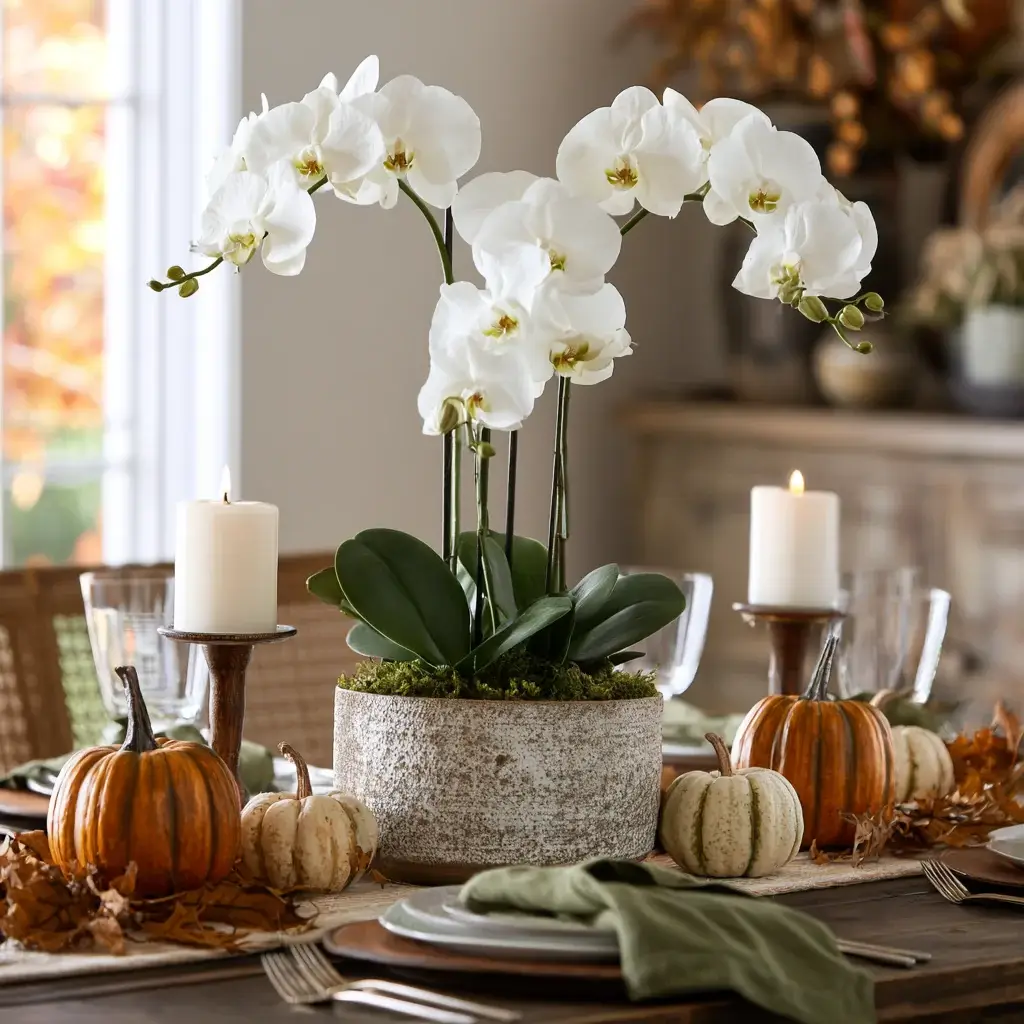
- Phalaenopsis Orchids: Compact plants with arching stems and broad, elegant blooms. They are a highly versatile choice for low, conversational arrangements.
- Miniature Orchids: These provide delicate detail and fit comfortably into smaller vessels or layered, multi-level displays.
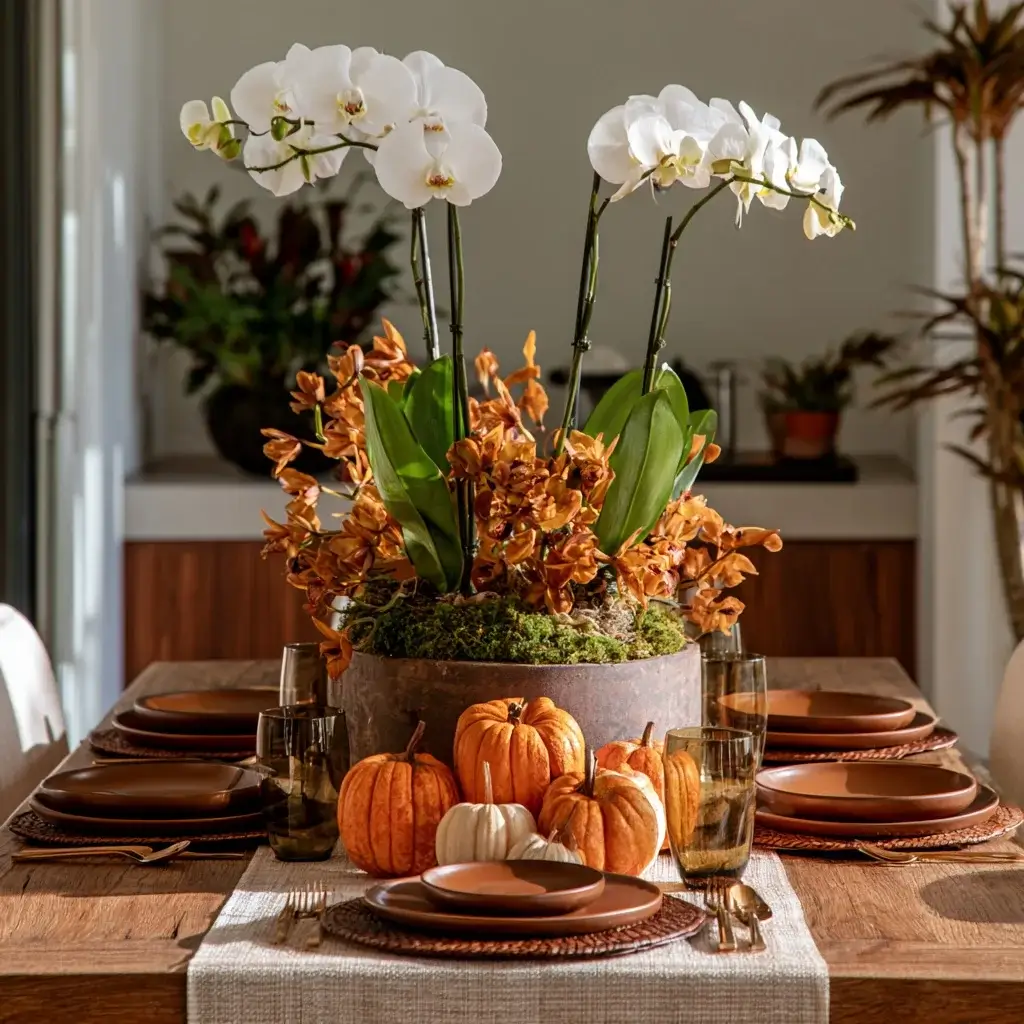
- Cymbidium Orchids: Fuller and more substantial, with upright stems and generous flowers. They create a bolder silhouette and work beautifully in larger arrangements, though they require more space and a carefully chosen container.
Design Principles for the Holiday Table
Practical choices help the display remain attractive throughout the gathering. When designing your orchid centerpiece, keep these essential guidelines in mind:
- Prioritize Plant Health: Look for healthy plants with firm, unblemished leaves. Select orchids with a few unopened buds, which will extend the arrangement’s appeal as they develop over the holiday weekend.
- Consider Fragrance: Be mindful of guest sensitivities. Scented flowers or heavily perfumed candles can be distracting in a dining area where the aroma of the meal should take center stage.
- Maintain Sightlines: Match the plant and vessel to the table’s scale. Keep the overall display low enough to allow for comfortable conversation across the table, leaving ample room for serving dishes.
- Balance Textures: The most inviting approach balances an orchid’s refined appearance with warm, natural textures such as branches, foliage, wood, or subtle seasonal accents. This contrast lets the flowers feel special while remaining grounded in a relaxed Thanksgiving setting.
Color Palettes and Container Selection
Begin with the colors already present in your table setting, then choose an orchid palette that complements rather than competes with them.
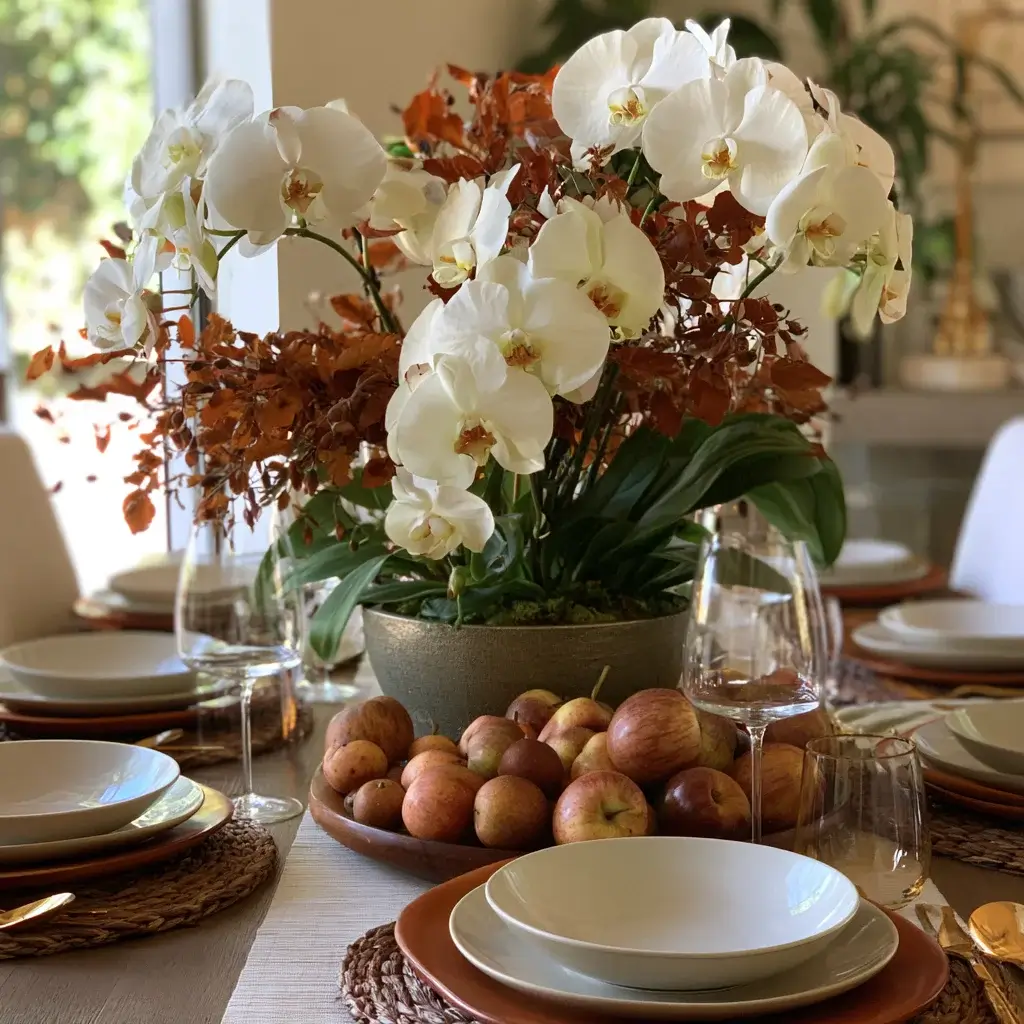
Coordinating Colors
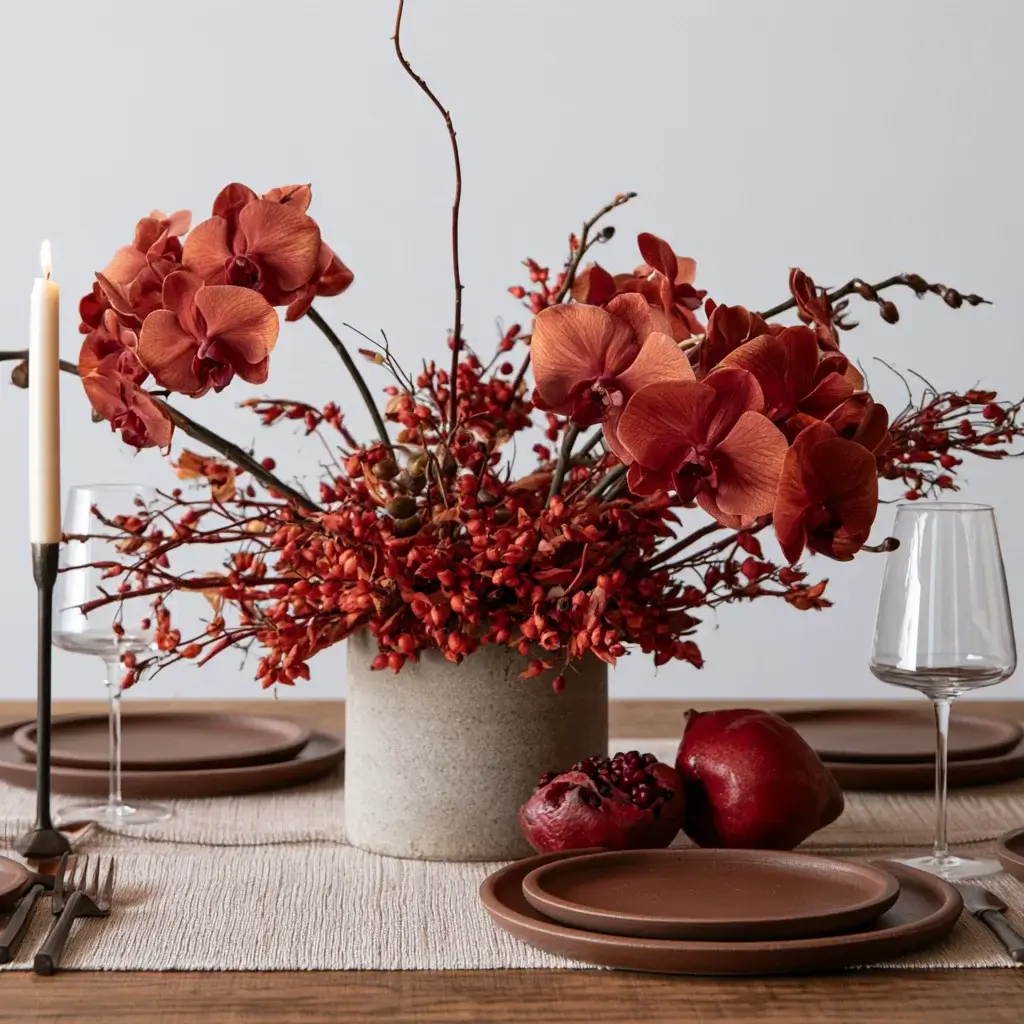
White and cream blooms offer a versatile foundation. They look especially refined beside gold accents, while rust, burgundy, and deep green provide seasonal contrast. A pale orchid can soften a richly colored tablecloth or bring brightness to dark wood and foliage. For a more colorful arrangement, use pink or purple orchids as restrained accents, allowing the flowers to add distinction without overwhelming the autumn palette. Always consider the surrounding plates, linens, and centerpiece elements when deciding how much contrast the display needs.
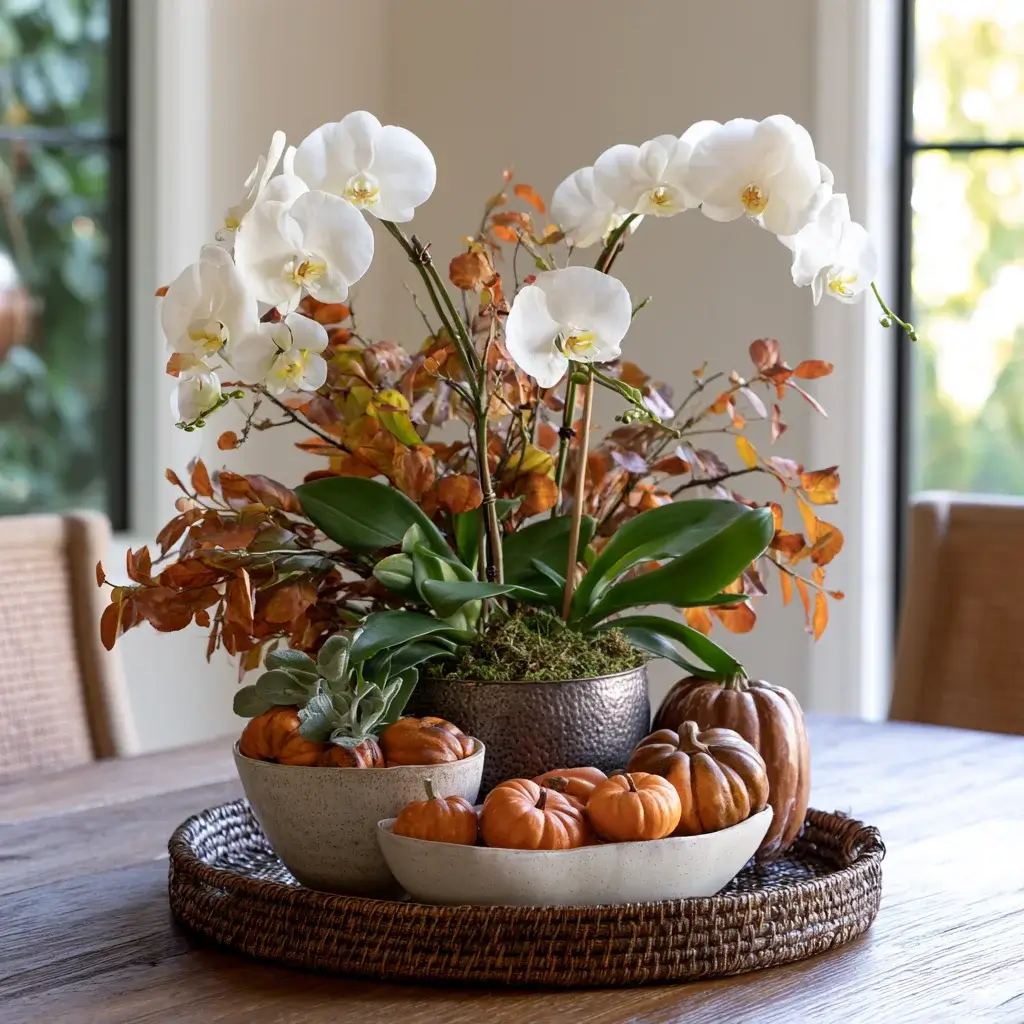
Choosing the Right Vessel
The container helps connect an orchid to seasonal décor. Ceramic bowls provide a clean, substantial look, while woven baskets and wooden boxes introduce natural texture. Metallic cachepots can echo gold or copper details and lend a more formal finish. Warm-toned pots or decorative sleeves in terracotta, ochre, bronze, or deep brown can tie the plant to fall colors even when the blooms are white.
Crucial Care Tip: Always keep the orchid in its plastic nursery pot, which has drainage holes, and place that pot inside the decorative outer vessel. Never plant the orchid directly into a container without drainage, as trapped water will damage its roots. Lift the inner pot to drain it after watering, and empty any water collected in the cachepot.
Three Elegant Orchid Centerpiece Recipes
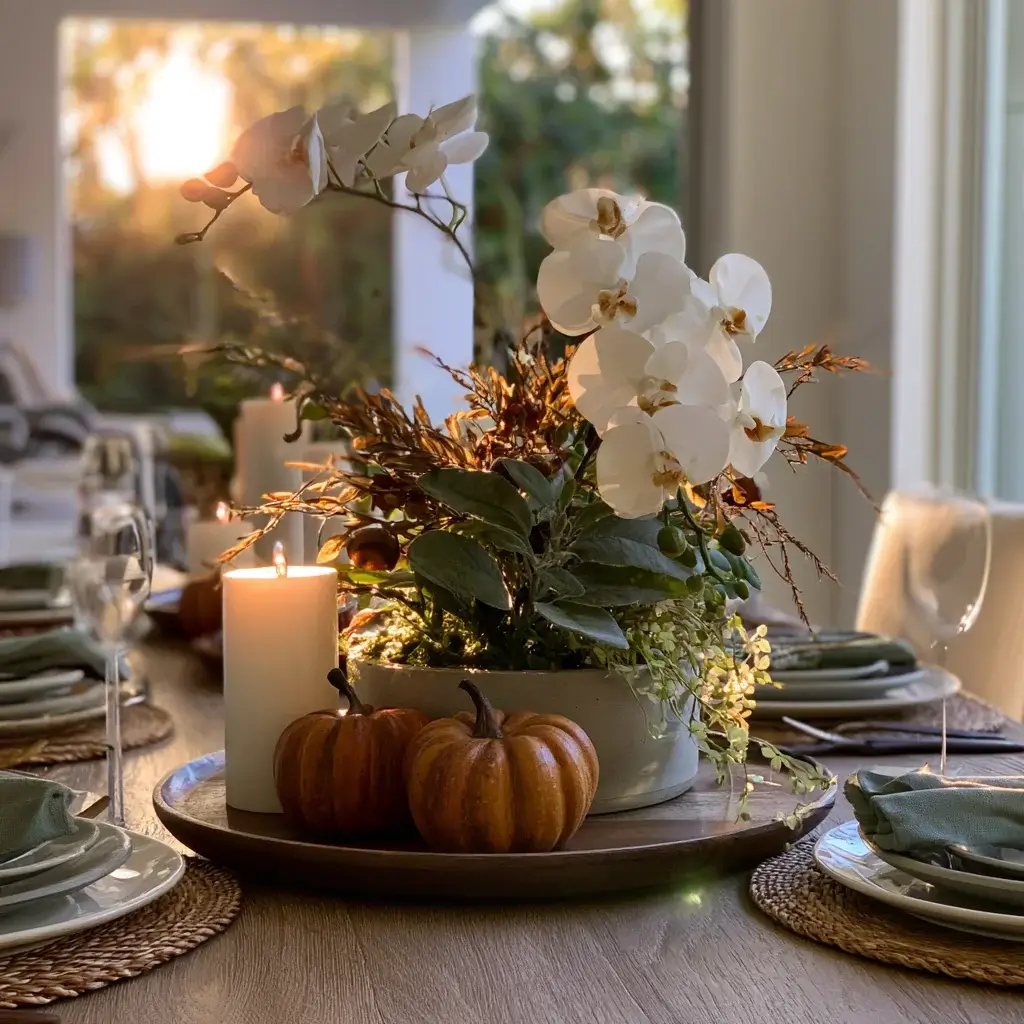
Use supporting accents sparingly so the orchid remains the focal point. A little moss can disguise the nursery pot, and small gourds, dried leaves, berries, or a few branches can add seasonal detail around the base. Arrange these materials without pressing them against the flowers or blocking the leaves.
Here are three distinct design styles to suit any Thanksgiving table:
The Minimalist Focal Point
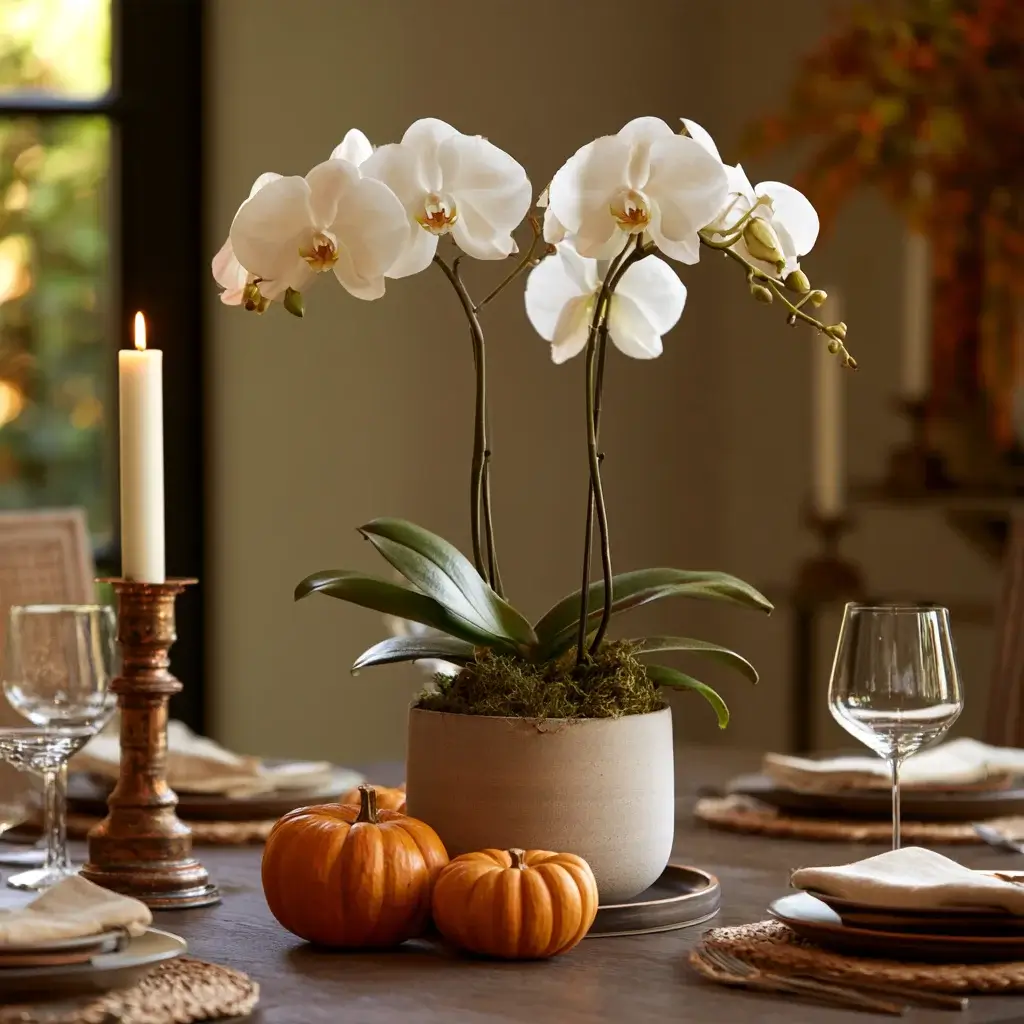
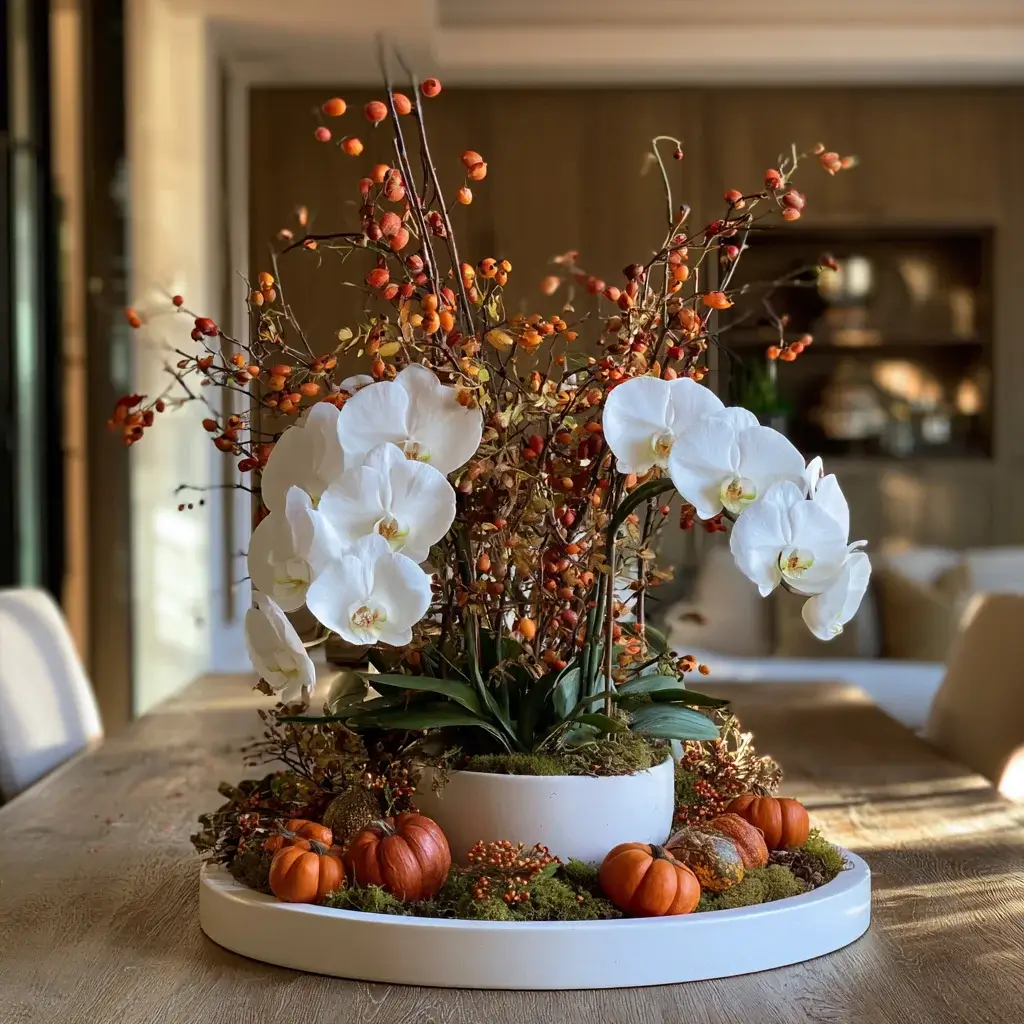
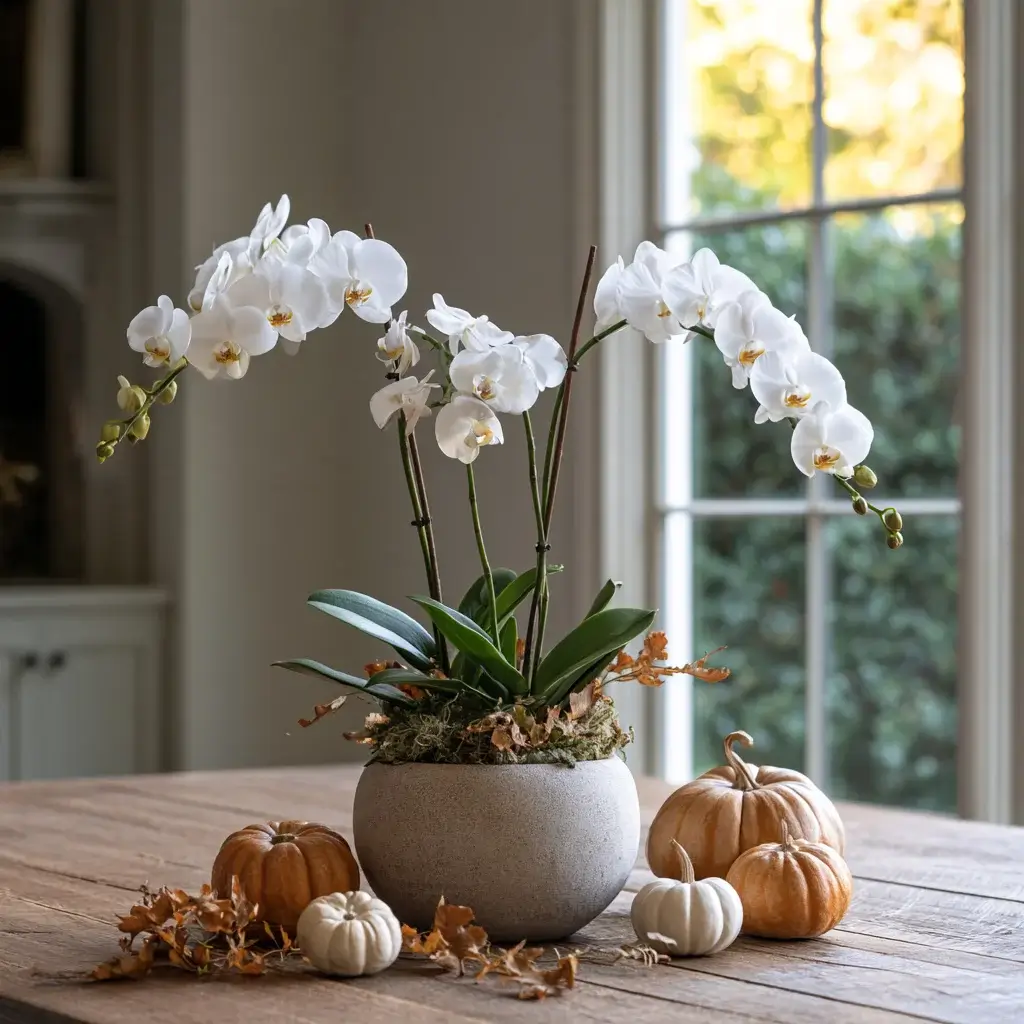
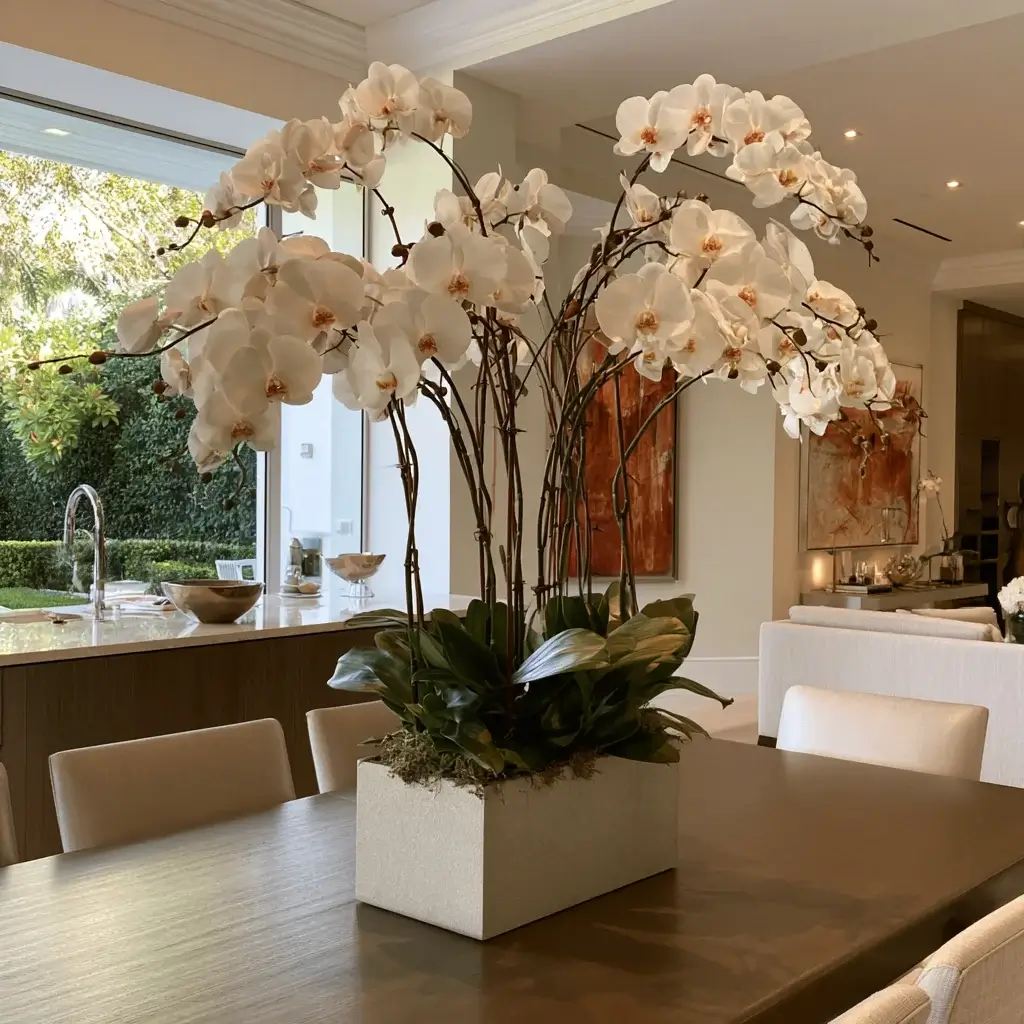
For a simple, polished look, place one healthy orchid in a substantial ceramic or metallic pot. A matte ivory, charcoal, or warm terracotta vessel suits a relaxed table, while aged brass or copper adds a formal note. Set the pot on a small plate or low stand if needed for height, then arrange a loose ring of moss around its base and tuck in a few mini pumpkins. Keep moss outside the potting medium and leave the orchid’s crown unobstructed. This design works exceptionally well on small dining tables. Repeat one color from the flowers in your napkins or glassware to connect the arrangement to the setting.
The Woodland-Inspired Display
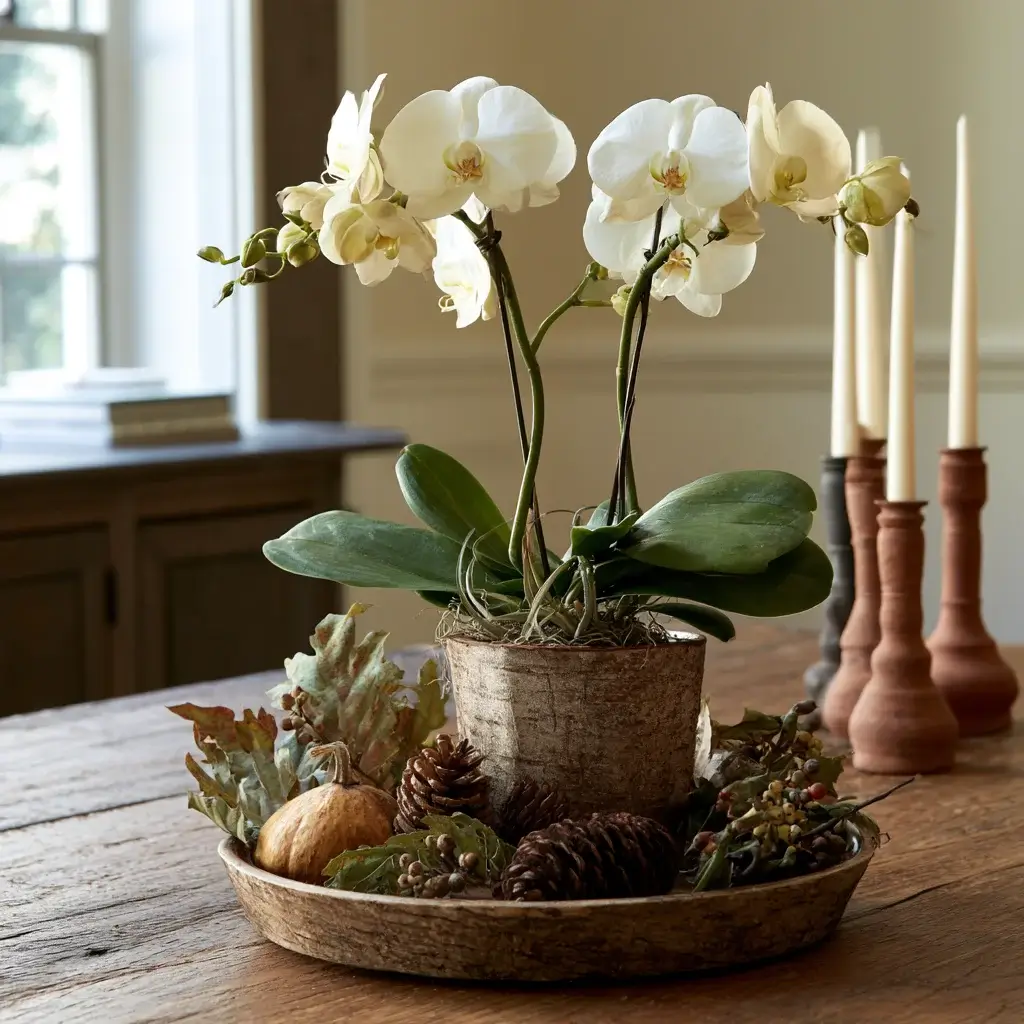
Nestle a compact orchid beside a shallow tray filled with bark, foliage, and a few pinecones. Choose natural tones such as green, brown, cream, and muted rust, adding one miniature gourd or a handful of berries for a seasonal touch. Keep every decorative material on the tray or around the orchid’s pot, never packed into the plant’s roots. Use only a few pieces of bark and foliage, allowing the tray surface to remain visible. The result should feel gathered from nature, not crowded.
The Long-Table Orchid Runner
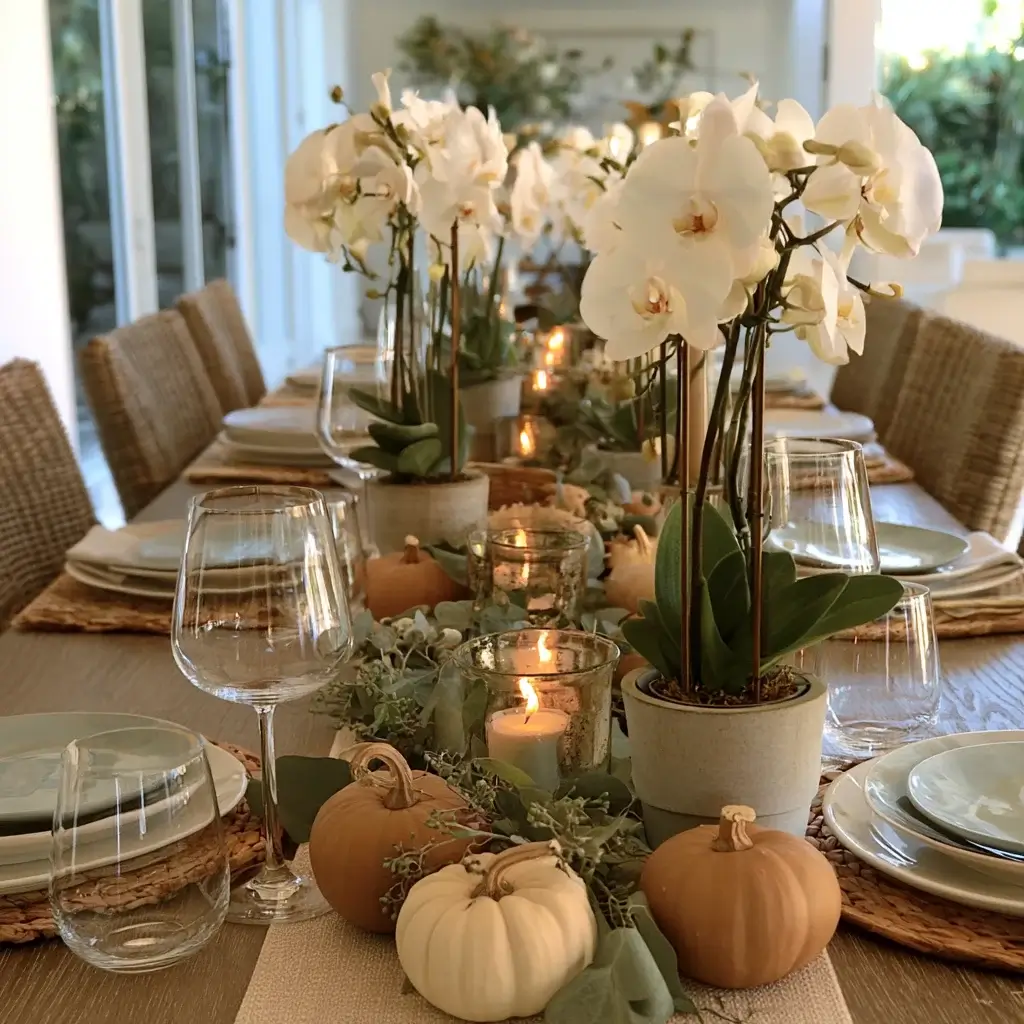
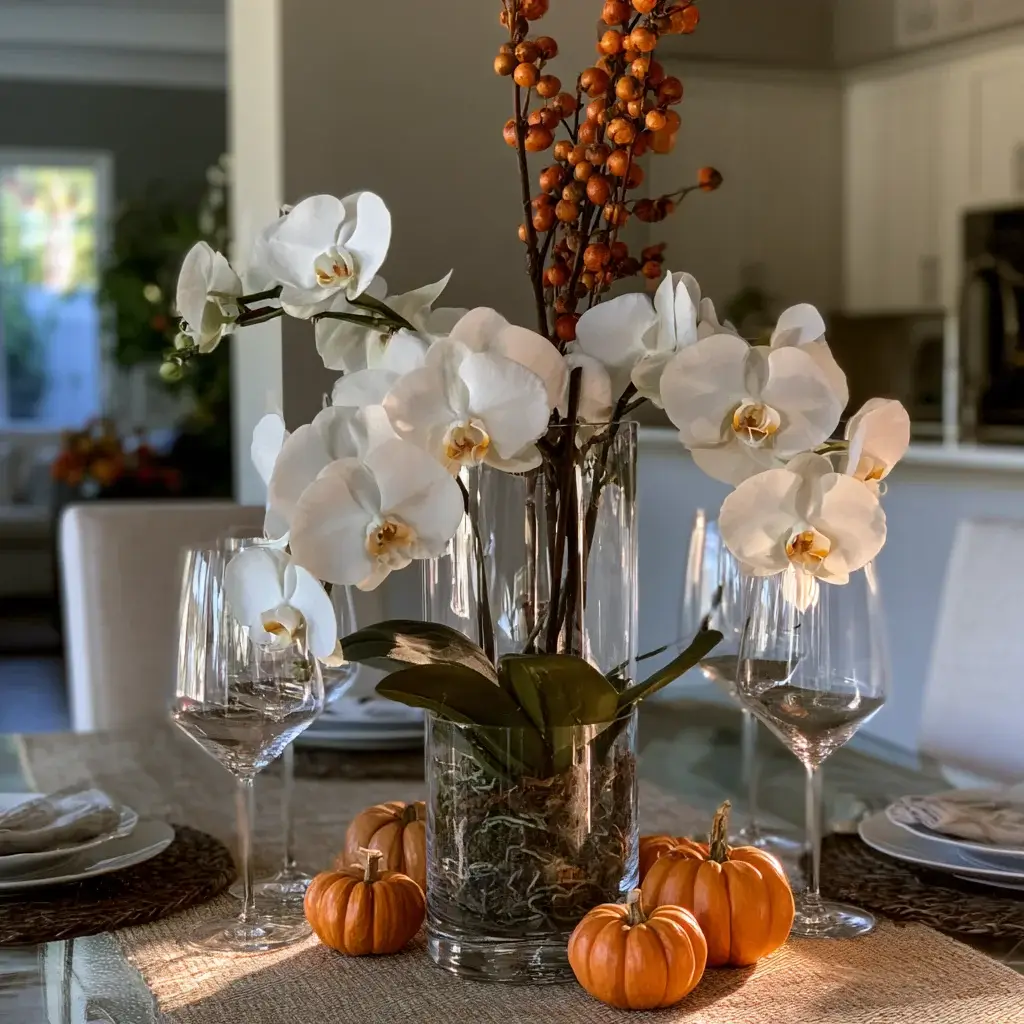
On a long table, create a low runner by spacing several small orchid pots along the center, with low gourds, greenery, and candleholders between them. A palette of white or blush blooms, soft green foliage, and warm neutral gourds keeps the line cohesive. Keep flowers and candles low enough to preserve sightlines, and leave clear gaps for platters. Vary the gourds slightly in size, but repeat pot styles or colors to maintain a steady visual rhythm. If the display begins to feel busy, remove accents before adding height or extra pieces.
Styling, Safety, and Post-Holiday Care
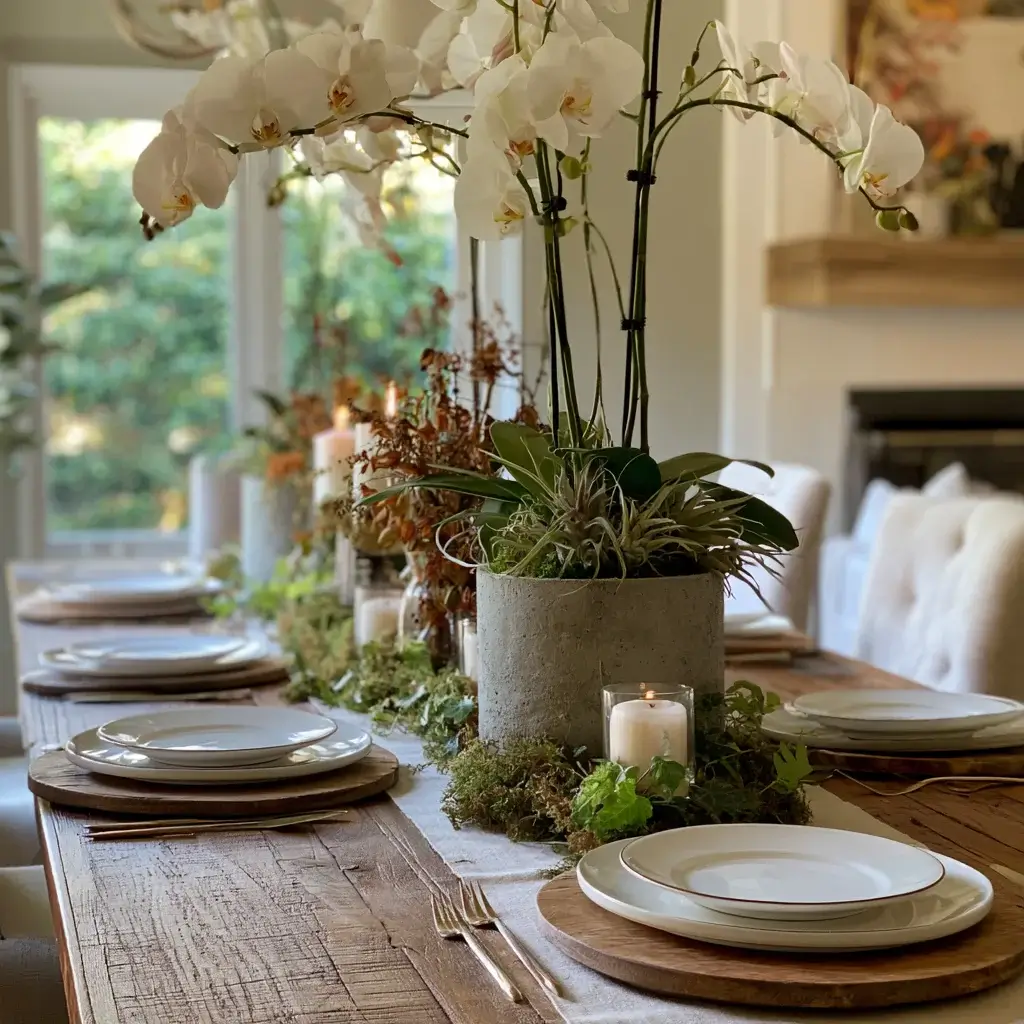
Before guests arrive, prepare the orchid centerpiece early enough to check its stability and condition. Place the pot and any decorative cachepot on a level, waterproof tray that can catch drips without exposing the tablecloth or wooden surface to moisture. Confirm that the inner pot is not standing in water. Choose a position where the orchid can stay throughout the meal rather than moving it repeatedly.
Ongoing Care and Safety
Orchids generally do not need additional watering simply because they are displayed on the table. Check the potting medium and follow the plant’s usual watering routine. Avoid placing the arrangement beside hot candles, heating vents, or drafty doors and windows, and keep it out of direct midday sunlight. For safe styling, position candles and other open flames well away from leaves, roots, and blooms. Do not add decorations that press against flowers or block airflow around the plant.
After the Holiday
Once Thanksgiving has passed, remove temporary decorations gently, taking care not to tug on stems or damage blooms. Clear away any ribbon, picks, or foliage that has begun to wilt, and check the tray and outer container for trapped water. Return the orchid to its preferred bright, indirect-light location, such as a suitable spot near a window, while avoiding harsh sun and temperature extremes. Continue to monitor the potting medium and water according to the plant’s normal needs. With thoughtful placement and ordinary ongoing care, the orchid can remain a living part of the home long after the table has been cleared, and may even bloom again in a future season.